Skip to content
  • Clear communication
  • Free inspections
The Woodlands, TX (281) 555-0106
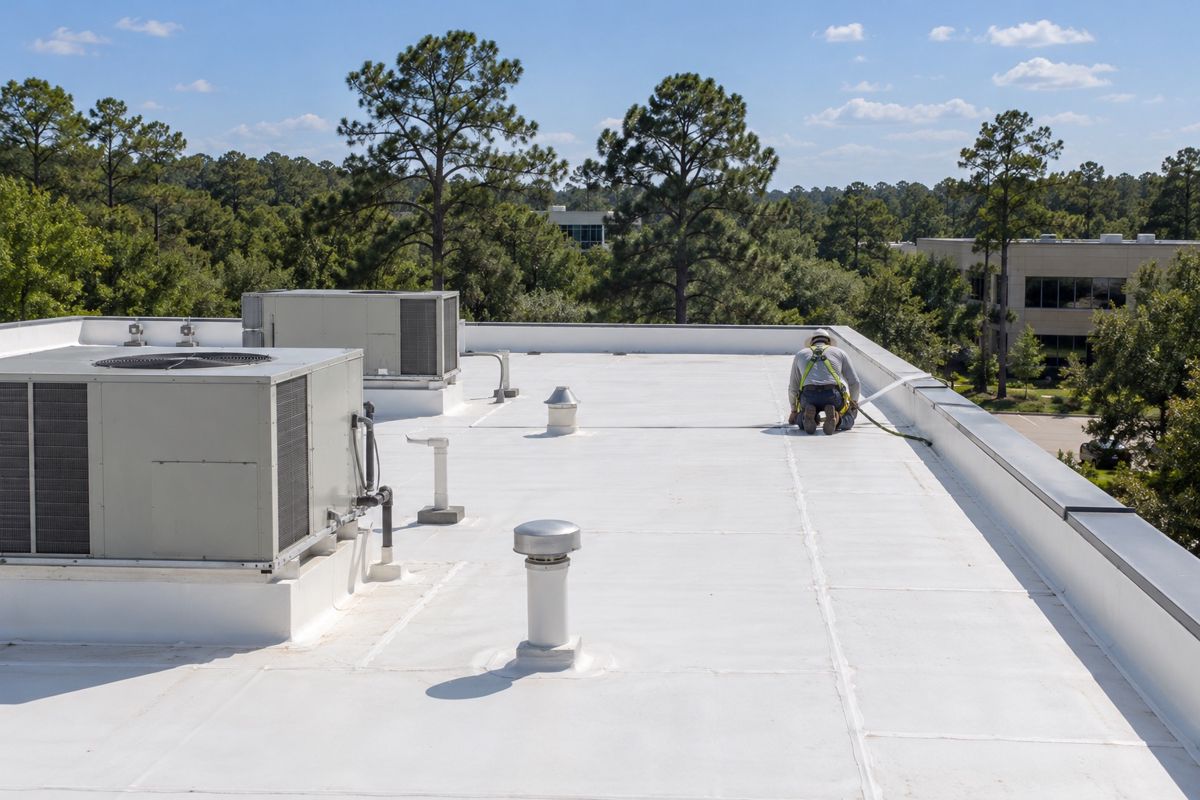
Flat membrane roof on an office building with a roofer checking a seam

Flat and low-slope roofs

Commercial roofing in The Woodlands for working buildings

Offices, retail and medical buildings need roofs that drain, hold up to Texas heat and keep tenants dry. We plan the work around the building.

  • Flat and low-slope roof systems
  • Repairs, recoats and replacement
  • Scope written down before work begins

Step 1 of 3

What do you need?

What types of commercial roofs are common in The Woodlands?

The Woodlands has a large mix of commercial property, from office parks and medical buildings to shopping centers, restaurants, schools and church campuses. Many of them have flat or low-slope roofs, and others have metal panel roofs or a mix of both.

Common systems include:

  • TPO and PVC membranes that are heat-welded at the seams and reflect sunlight
  • Modified bitumen in layers, often found on older flat roofs
  • EPDM rubber membranes
  • Standing seam and other metal roofs for pitched or low-slope areas
  • Built-up roofs with layers of felt and surfacing

The right system depends on the building, the budget, and how long you plan to own it. A roof assessment helps you make that call. Our roof inspection page explains what that visit covers.

What problems do flat roofs have here?

Water is the enemy of a flat roof, and Texas weather gives it plenty to work with. Heavy downpours can overwhelm drains. Standing water, called ponding, speeds up wear on membranes. Heat expands and contracts materials every day, which opens seams and cracks flashing over time.

Tree cover matters on commercial sites as well. Needles, leaves and seed pods clog scuppers and drains, especially near wooded edges of parking lots and office campuses. HVAC units add a different risk, because service crews walk the roof, set tools down and sometimes leave penetrations poorly sealed.

Look for stains on ceiling tiles, water at the base of walls, bubbling or blisters on the membrane, and debris-filled drains. Small problems caught early often mean a repair rather than a replacement. If the damage followed a storm, see storm and hail damage repair.

What changes the price of a commercial roof?

Commercial pricing depends on the building rather than a standard formula. A fair quote spells out what was measured and which items are included.

  • Roof area and shape. Square footage, parapets and levels all matter.
  • System choice. TPO, metal, modified bitumen and others sit at different price points.
  • Condition of the deck and insulation. Wet or crushed insulation may need replacing.
  • Drainage changes. Tapered insulation, new drains or scuppers add scope.
  • Penetrations. HVAC curbs, pipes and skylights need flashing detail.
  • Access and safety. Lifts, cranes and fall protection can affect cost.
  • Work hours. Jobs near open businesses may need careful phasing.

Ask what warranty comes with the materials and the workmanship, and who stands behind it. Get the terms in writing before you sign.

A small repair may take a day. A full re-roof on a multi-tenant building can take weeks, depending on size, the system, and weather. Rain stops work on most membrane systems, so a firm date is less useful than a plan for what happens if the weather turns.

On a working building, planning is the main job. The crew should agree with you on where materials will be staged, how tenants and customers will move around, what hours noisy work happens, and how the roof is closed up each evening so a storm cannot get under it.

Expect a pre-job walk, a safety plan for people near the work area, and a final walk afterward. Property managers should confirm any approvals needed from owners or a commercial association, and ask the contractor for the permit status where one applies to the work.

When should a building owner call?

Call when you see leaks, ceiling stains, ponding that lasts more than a day after rain, or visible damage on the membrane or flashing. Call before buying a building as well, since an aging roof is a major cost to plan for. A written assessment gives you something to use in negotiation.

Planning ahead is cheaper than reacting. A small yearly look at drains, seams and rooftop equipment often extends the life of a flat roof and reduces surprise leaks. If you manage several buildings, describe each building when you reach out so the crew can plan.

Start with the home page or call (281) 555-0106, and tell us the building type, roof system if known, and what you have noticed. For smaller issues, our roof repair page explains how leaks are traced.

Clear communication
Free inspections
Written estimates
Local crew

Questions about roofing in The Woodlands

Do you handle both repairs and full commercial re-roofs?

Commercial roofing covers both. Small leaks, seam failures and flashing problems can often be repaired. When a roof is wet, worn out or failing in many places, a recoat or replacement may be the sensible plan. An assessment tells you which one fits your building and your budget.

Can a flat roof be recoated instead of replaced?

Sometimes. A restoration coating can extend the life of some membranes if the roof is dry and sound underneath. It does not work on wet insulation or badly damaged roofs. A moisture survey and test cuts can show whether recoating is a realistic option or a waste of money.

How do you keep the business running during roof work?

It takes planning. Work can be phased in sections, noisy tasks scheduled for quieter hours, and entrances protected. Ask the contractor for a written plan before work starts, covering staging areas, walkways, evening dry-in and who tenants should contact with questions.

What should I ask a commercial roofing contractor?

Ask for proof of insurance, references from similar buildings, the exact system proposed, and warranty terms in writing. Ask who will supervise the job on site and how weather delays are handled. Compare quotes line by line, because scope often differs between bids that look alike on the surface.

Does hail damage commercial roofs too?

Yes. Hail can bruise membranes, crack coatings, dent metal and damage rooftop equipment. Flat roofs can hide damage because it is hard to see from the ground. After a hailstorm, get the roof checked and review your commercial property policy for reporting deadlines.

Request commercial roofing

Tell us what you need and we call you back.

No obligation.

Step 1 of 3

What do you need?

Ready when you are

Call now or request a quote online.

(281) 555-0106

How it works

1

Call or request a quote

Tell us what is happening with the roof.

2

Free inspection

A roofer checks the roof and gives a written price.

3

Work done right

Clean crew, nail sweep, warranty in writing.