Skip to content
  • Clear communication
  • Free inspections
The Woodlands, TX (281) 555-0106
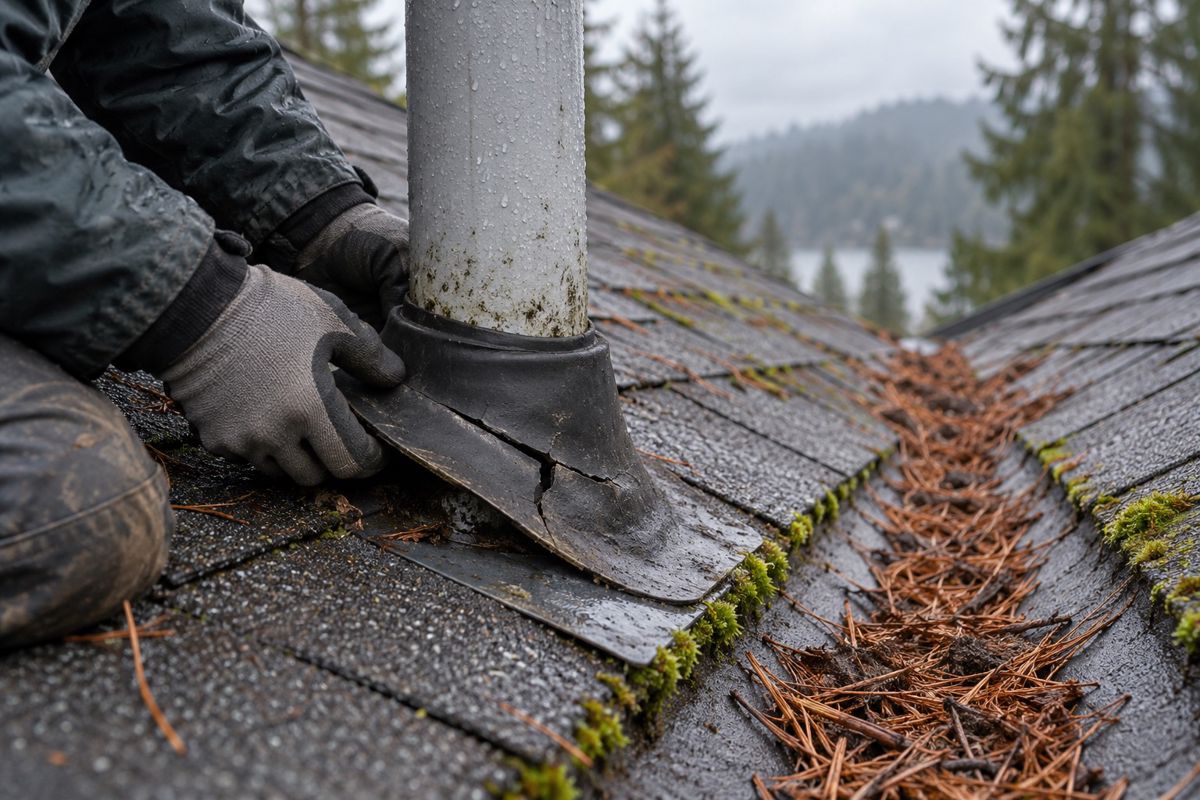
Gloved hand repairing a roof vent boot beside pine needles and moss

Repairs and leak detection

Roof repair in The Woodlands that starts by finding the leak

A stain on the ceiling is rarely right under the hole. We look for the real entry point before anything gets patched.

  • Leak source traced before the fix
  • Flashing, shingles, vents and valleys
  • Plain advice on repair or replace

Step 1 of 3

What do you need?

What causes roof leaks on wooded lots in The Woodlands?

Trees are the main difference between roofs here and roofs in open neighborhoods. Pine needles and oak leaves collect in valleys and behind chimneys. They hold water against the shingles, and water that cannot run off will eventually find a way in. Limbs rubbing the roof wear away granules, and a branch dropped in a storm can crack or lift shingles.

Other common sources include:

  • Dried-out or lifted flashing around chimneys, walls and skylights
  • Plumbing vent boots with cracked rubber collars
  • Nail pops and shingles lifted by wind
  • Moss and algae that hold moisture and lift edges
  • Old sealant that has shrunk or split

If a roof has leaks in several spots, the roof may be near the end of its life. See roof replacement for what that looks like.

How is a roof leak found and fixed?

Water travels along rafters and decking before it drops onto a ceiling, so the stain you see can be several feet from the actual opening. Finding the entry point is the real work of roof repair in The Woodlands.

The usual steps

  1. Look at the ceiling and attic to see where moisture shows up and which wood is stained or soft.
  2. Check the roof above that area, including flashing, vents, valleys and shingle condition.
  3. Test or trace the source when it is not obvious, working from the lowest point up.
  4. Repair the cause, such as replacing a boot, resealing and re-lapping flashing, or replacing damaged shingles.
  5. Explain what else was seen, so you can decide on anything that is not urgent.

A quick tube of sealant on the surface may hide a leak for a few weeks. A proper repair addresses why water got in.

What changes the cost of a roof repair?

Repair prices vary a great deal, so we give a written quote after the roof is looked at rather than a number over the phone. The things that change the amount are:

  • Size of the damaged area. A few shingles are a small job. A whole valley or slope is not.
  • Roof height and pitch. Steep and tall roofs need more safety setup and time.
  • Parts and materials. Matching older shingles can be difficult, and metal flashing costs more than a vent boot.
  • Hidden damage. Wet insulation or soft decking under the leak adds work.
  • Access. Trees, fences and landscaping close to the house slow things down.

When the repair estimate starts to approach a good share of a new roof, a straight talk about inspection findings and the roof's remaining life is worth having.

Many small repairs are done in part of a day, as long as the weather is dry. Larger repairs, or work held up by rain, can take longer. Wet roofs are unsafe and sealants will not bond properly, so a crew may reschedule rather than rush it.

On the day, expect someone to look at the problem area again, protect the nearby landscaping, and make the repair. You may hear walking and hammering on the roof. Move cars if asked, and keep pets inside. After the work, the area should be cleaned and any leftover materials taken away.

It also helps if you check your attic afterward during the next rain. If you notice a stain growing, call back quickly. Repairs that fail should be looked at again, not ignored.

When should I call about a roof leak?

Call when you see a ceiling stain, drip, bubbling paint or damp insulation. Small leaks grow, and moisture in attic framing can lead to mold and rot. Put a bucket under active drips and move furniture, but do not climb onto a wet roof yourself.

Also call after a storm if you find shingle pieces in the yard, dented vents or sections of exposed felt. If the damage came from hail or high wind, read the page on storm and hail damage repair, since an insurance claim has its own steps.

If you are not sure the roof is the problem, say so. Sometimes the culprit is a plumbing line, window frame or air conditioning condensation. A careful look can rule roofing in or out. You can reach the crew from the home page or by calling (281) 555-0106.

What you can expect

1

Clear communication

2

Free inspections

3

Written estimates

4

Local crew

Questions about roofing in The Woodlands

Can a leak be fixed without replacing the whole roof?

Often yes. When the roof is otherwise in decent shape, a leak at a vent boot, flashing or a few damaged shingles can be repaired on its own. If leaks keep appearing in different places, or the shingles are brittle and worn, repairs may only buy time. An honest look at the whole roof helps you choose.

Why did my roof start leaking after it rained hard?

Wind-driven rain pushes water sideways under shingles and past flashing that normally sheds light rain. Needles and debris in valleys can also back water up during heavy storms. A leak that only appears in big storms is still a leak, and it should be traced rather than ignored until the next one.

Is moss on my roof a problem?

Light algae streaking is mostly cosmetic. Thick moss is different, because it holds moisture and can lift shingle edges. Shaded north-facing slopes tend to collect it first. Cleaning should be gentle, since pressure washing can strip granules. Trimming back branches that block sun and drop debris helps more than any single cleaning.

Will repaired shingles match the rest of the roof?

Not always. Shingles fade with sun and age, and some older styles are no longer made. A good repair uses the closest match available and is installed so it keeps water out. If appearance matters or your neighborhood is strict about it, ask about the options before the work starts.

Should I try to patch a leak myself?

Putting a bucket under a drip is fine. Climbing a wet or steep roof is risky, and surface sealant often masks the real problem. If you must do something temporary, a properly secured tarp is better than caulk, but it is safest to let a crew handle it.

Request roof repair

Tell us what you need and we call you back.

No obligation.

Step 1 of 3

What do you need?

Ready when you are. Call now or request a quote online.

How it works

  1. Call or request a quote

    Tell us what is happening with the roof.

  2. Free inspection

    A roofer checks the roof and gives a written price.

  3. Work done right

    Clean crew, nail sweep, warranty in writing.